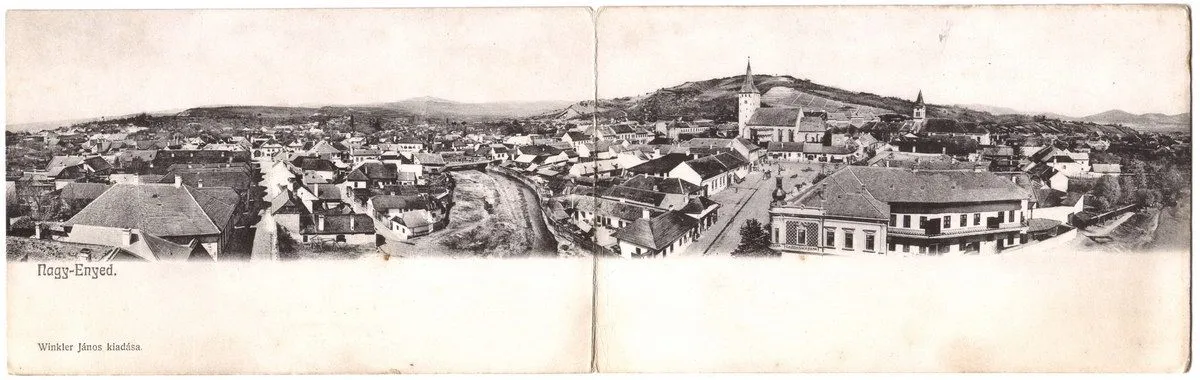
Țara Năsăudului (the Năsăud Land)
Location
Țara Năsăudului (the Năsăud District, Nösnerland) is the land lying between the Someș River to the north and the Mureș to the south.
History
In the Roman period it was known as Districtus Rodnensis because of the rich gold and silver deposits at Rodna. After the Romanian border-guard command was established here, the area developed, both economically and administratively, around the town of Năsăud, taking the name of the Năsăud District. The first (uncertain) documentary record of Năsăud, under the name Naszod, dates from 1245.
Later, in the 13th–14th centuries, the Hungarian kings also colonised this eastern part of the kingdom with populations of German origin (Saxons). The first settlement of these colonists was called Nösen (today's Bistrița), hence the name Nösnerland.
Tourist attractions
The village
Customs and traditions
The Șezătoare (evening work gathering)
One of the most beautiful traditions still preserved is the șezătoare. It is a small gathering, held on the long autumn and winter evenings, attended, depending on its kind, by girls, women, men and young lads, the latter usually going about in a group from one șezătoare to another, with precise roles within the custom.
The girls and women each work on their own handiwork, while the participants as a whole discuss various events in the life of the village, perform almost the entire folk repertoire and organise dramatic party games, some of which are also found at wakes.
The șezătoare begins after the field work is over, only rarely having a fixed date, and is held, with some exceptions, until the start of the spring work. It takes place every evening except Saturday and Sunday evenings and those that precede holidays of all kinds.
The host of the șezătoare had to be chosen in good time in order to forestall certain difficulties that might cause the participants to hold back from certain aspects of this tradition. The room had to be spacious, and the host must not be a "grumpy" person. For this favour the host was rewarded by the participants with work and with certain material goods such as firewood, paraffin (nowadays they pay for the electricity), flour, etc.
The age at which people are admitted to the șezătoare differs from one village to another. In Parva, for example, those who have finished military service take part, those of 18, from 14-15 years old and lately even from 10-12, but these last ages are excessive because the repertoire of the șezătoare, its games and practices are meant to mock and drive away those who are too young to take part in the custom.
First of all, the șezătoare is an occasion for proper conduct and work, for displaying the skill and diligence of the girls. At the șezătoare, young people have the opportunity to get to know one another and to form relationships that lead to marriage. The șezătoare also offers a happy occasion to comment on and judge the everyday life of the village, shaping and strengthening public opinion, whose educational role is by no means negligible.
Another function is linked to the festive character of the șezătoare and its specific folk repertoire. At the șezătoare the community's repertoire is performed, but above all it is created and passed on.
Numerous dramatic and party games are organised at the șezătoare, such as: THE WELL, THE LITTLE FLEA, THE LITTLE RING etc.
Traditional cuisine
Geography
Spirituality
Multimedia
|
Lads' dance from Năsăud |
Dance from Năsăud |
Valeria Peter Predescu - Folk music |
Bibliography
1.http://www.scoala-culturala.ro/parva/etnografia.html
Other ethnographic areas
- Ținutul Secuiesc (Székely Land)
- Ținutul Pădurenilor (the Land of the Forest People)
- Țara Zarandului (the Zarand Land)
- Țara Moților (Land of the Moți)
- Țara Bârsei (the Bârsa Land)
- Țara Hațegului
- Țara Făgărașului
0 comments