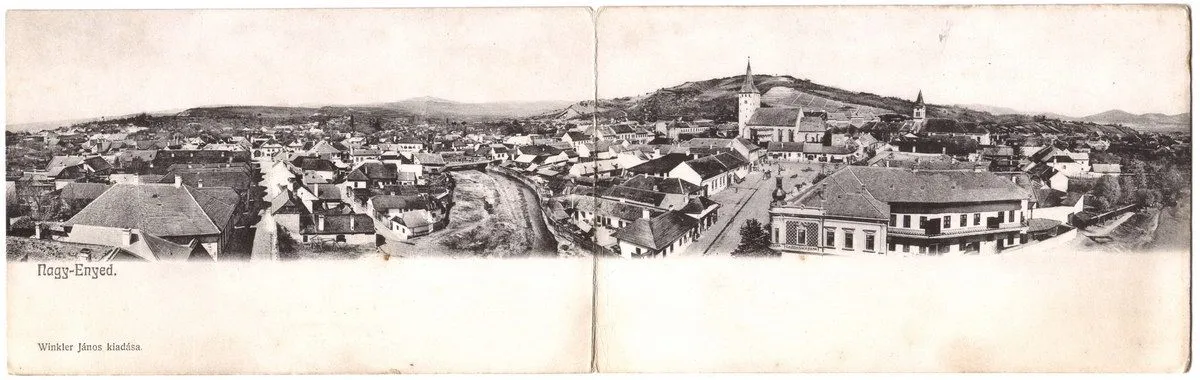
Ținutul Secuiesc (Székely Land)
Location
Ținutul Secuiesc (Hungarian: Székelyföld, German: Szeklerland), known in English as the Székely Land, is a historical region of Romania in eastern Transylvania, inhabited mostly by Székely Hungarians and traditionally divided into "seats". In terms of area, the Székely Land covers most of Covasna and Harghita counties, as well as part of Mureș County.
History
From an administrative and territorial point of view, the land inhabited by the Székelys, the so-called Ținutul Secuiesc, was organized into seats in the 14th and 15th centuries. The notion of the seat (Latin: sedes), in the sense of an administrative-territorial unit, probably borrowed by the Székelys from the Saxons, appears consistently in written sources only from the 14th century onwards.
The future Székely seats were first mentioned in documents under other names. In the 13th century, namely in 1270, the community of the Székelys of Tileagd (Latin: universitas Siculorum de Telegd) is recorded; in 1272 and 1311 the community of the Székelys of Kézd is mentioned, and in 1291 the Székelys and the community of the Székelys on the Arieș are attested. Only in the 15th century, in 1408-1410, is the Mureș Seat mentioned, while the Odorhei Seat is attested as such only in 1448.
The names of the seven principal Székely seats were, in alphabetical order, the following:
- the Székely Seat of the Arieș (Hung. Aranyos-szék),
- Ciuc (Hung. Csik-szék),
- Kézd (Hung. Kézdi-szék),
- Mureș (Hung. Maros-szék),
- Orbai (Hung. Orbai-szék),
- Sepsi/Sfântu Gheorghe (Hung. Sepsi-szék)
- Tileagd (Hung. Telegdi-szék) (later Odorhei, Hung. Udvarhely-szék).
Each Székely seat was led by the judge of the seat or of the land (Latin: judex sedis or judex terrestris). All these administrative-territorial units were in turn headed by the Count of the Székelys, an office which, in terms of political importance, was the second highest dignity in the Voivodeship of Transylvania, and to which the royal judge (Latin: judex regis) was subordinate.
After the founding of the Austro-Hungarian Monarchy the Székely seats were abolished, and several counties (vármegyék) appeared in their place.
The traditional capital of the Székelys was Târgu Mureș, [27] a royal town then called Székelyvásárhely ("the Székely Market" or "Market of the Székelys"). This medieval name should not be confused with the present-day name of the town of Târgu Secuiesc (Kézdivásárhely), which lies 250 km to the south-east. In medieval Latin, Târgu Mureș was also called "Novum Forum Siculorum", that is, "the New Assembly Place of the Székelys".
Tourist attractions
- The Medieval Citadel of Târgu Mureș - lies close to the city centre. Built on a pentagonal plan and surrounded by a defensive wall, the citadel has seven bastions, five of which bear the names of the guilds that, according to tradition, maintained them. The citadel complex covers about 4.3 hectares and consists of a fortified enclosure with 7 bastions joined by walls that form a large inner courtyard, within which stand the Reformed Church and the Bakery Building.
- Călimani Mountains National Park, located in the western part of the Eastern Carpathians, covers an area of 24,041 hectares in Mureș, Bistrița and Suceava counties. The Călimani Mountains belong to the volcanic chain on the western side of the Eastern Carpathians and are its highest and most extensive unit. The relief of the Călimani Mountains is remarkable for its diversity and spectacular scenery, but unfortunately, as a result of sulphur mining carried out in the 1980s, the landscape has suffered greatly.
- Sovata Resort - was first mentioned as a place of healing in a document of 1597, but only became a spa resort in 1850. It is surrounded by the hills Cireșelu, Capela, Bechiș, Dealul Mic and the Salt Mountain, covered with forests of beech, oak, hornbeam, elm, chestnut, fir and birch. Sovata owes its fame to the lakes Ursu (46,000 m2), Aluniș (9,000 m2), Verde (5,000 m2), Negru, Roșu, Mierlei and Șerpilor, with chloride waters (of high concentration - from 40 to 250 g/litre) and sodium waters, which display the phenomenon of heliothermy.
- Borsec Resort, Harghita County - The Borsec spa and climatic resort lies in the intra-Carpathian depression of the same name, at an average altitude of 900 m. Among the notable local sights are: Șapte Izvoare (Seven Springs), 1,550 m from the centre of the resort; Poiana Zânelor (the Fairies' Glade) and the "travertine quarry", which form a group of neighbouring sights making up a single landscape of great tourist appeal; Grota Urșilor (the Bears' Grotto), a group of deep hollows formed by the natural erosion of the rocks under the action of seeping water (a karst phenomenon); Peștera de Gheață (the Ice Cave), a dark hollow between two rocks, also separated by erosion like the Bears' Grotto, and just as spectacular and majestic; Izvorul Străvechi (the Ancient Spring, a mofette), one of the oldest curative springs in the resort; the Pierre Curie Spring, about 1,800 m from the centre of the resort, the spring with the most radioactive mineral water in the resort; Cetatea Bufnițelor (the Owls' Fortress), where the ruins of military constructions from the First World War can be visited.
- The Praid Salt Mine - One of the largest salt mines in the country and in Europe is the Praid Salt Mine, whose historical beginnings date back to Roman times. Praid is the largest commune in Harghita County, comprising Ocna de Jos, Ocna de Sus and the small hamlet of Békástanya, with only 140 inhabitants.
- The painted church of Mugeni, Harghita County - A scene from the painted ensemble, the oldest that survives here, painted around 1350. A sequence from the legend of Saint Ladislaus. The holy King Ladislaus of Hungary sets out to fight the Cumans. The Battle of Chiraleș, against the Cumans.
- The painted church of Ghelința, Covasna County, a Roman Catholic church, 1330. In the upper register, scenes from the legend of Saint Ladislaus (the slaying of the Cuman with the help of the abducted maiden) and in the lower register scenes from the Christological cycle (the Flagellation and Crucifixion of Christ). One of the oldest and best preserved ensembles of Gothic painting in Transylvania.
- The fortified church of Dârjiu - Originally built in the Romanesque style, the church of Dârjiu was transformed in the second half of the 15th century into a Gothic place of worship. The church of Dârjiu houses a valuable ensemble of mural painting, partly destroyed, which must once have been as ambitious in conception as that of the church in Ghelința. This painting is extraordinary: it is thought that the artist himself, Master Paul of Ung (the bearded one), painted his own self-portrait in it (not without a certain ostentation), all the more so since it is the scene dedicated to the saint whose name he bore (Saint Paul is the one fallen before the horses). On the red banner above, painted in Gothic minuscule, we read a charming declaration of worldly love: "this work was painted and prepared by Master Paul, son of Stephen of Ung, AD 1411. I was writing and had a beautiful girl in mind" ("scripto scribebat et pulc( h )ram puella( m ) i( n ) mente tenebat.)
- The Székely National Museum in Sfântu Gheorghe – "Of all the provincial museums across the Romanian lands, apart from those in Cluj, the one in Sfântu Gheorghe is undoubtedly the most interesting and the most full of surprises ... the building houses objects thousands of years removed from the turmoil of our present times. To those who know how to read the mute yet so eloquent language of objects made by human hands, splendid vessels with their variously painted spirals speak of distant times, when the concern for beauty seems to have overcome the petty passions that divide us today. ... To my colleagues in the Székely Land I send these wishes with a clear conscience ..." (Alexandru Tzigara-Samurcaș, Inspector General of Museums, 1929)
- The Guilds Museum in Târgu Secuiesc - Houses valuable collections and exhibitions on the history of the town, its guilds and crafts. Alongside firefighting equipment from the 19th–20th centuries, the Guilds Museum boasts a famous collection of dolls in folk costume, "Zsuzsi and Andris" (over 350 exhibits). The museum's specialists have also made a town attraction of the late 19th-century "Bogdan" photo studio, where work is done by natural light only.
- The "Haszmann Pál" Museum in Cernat - This open-air ethnographic museum presents the folk architectural heritage of Covasna County, including stone and wooden grave posts, as well as traditional folk crafts and valuable exhibitions of folk art and local history. Its collections of agricultural machinery and cast-iron stoves are unique of their kind. The museum is also renowned for the folk art school it runs.
- The Baraolt Depression Museum in the town of Baraolt - Manages and displays evidence from the history of mining and the guilds, as well as local history collections. It holds rare pieces made by the glassworks of the Székely Land and by the potters of the Baraolt Basin. Work is currently under way on the proper display of a three-million-year-old mastodon skeleton, recently discovered in the lignite quarry at Racoșul de Sus.
- The Csángó Ethnographic Museum in Zăbala - Presents a unique collection of the folk art of the Hungarians of Moldavia (the Csángós) and of the daily life of these communities. The folk costumes, craft products and characteristically furnished traditional interiors give us the chance to glimpse the ways of life of the Csángó village communities. Alongside this exhibition, an old Székely house holds a rich collection of ethnography and local history from Zăbala.
The village
The people
According to the 2002 census, 668,471 Székelys and Hungarians live in Harghita, Covasna and Mureș counties (59.2% of the region's population). In Covasna and Harghita counties the Székelys form a majority of 73.8% and 84.1% respectively. The Székelys are a Hungarian-speaking ethnic group, today culturally assimilated into the Hungarian nation, who form the majority in Covasna and Harghita counties and in the central and south-eastern area of Mureș County. Besides them, the Hungarian-speaking inhabitants of a few villages in Alba, Cluj and even Sibiu counties also identify themselves as Székelys.
Customs and traditions
January - The Sovata Winter Games, Location: Sovata
Whit Monday (the second day of Pentecost) - The Peacock Folk Festival, Location: Praid, Ocna de Jos
Early June - The Daffodil Festival, Location: Lueta, Dealu
6 July - The Day of the 1,000 Székely Women, Location: Miercurea Ciuc
Early September - The Charcoal Burners' Festival, Location: the Calonda Plateau
October - The Grape Ball, Location: Praid, Ocna de Sus, Ocna de Jos, Corund, Sovata
Traditional cuisine
Székely cuisine is based on four main foods: potatoes, cabbage, pork and sour cream. Pork products such as bacon, liver sausage (caltaboș) and smoked meat preserved in jars are also especially popular. Before the potato was introduced in the late Middle Ages, the staple foods were millet and rye.
Also typical of the Székelys is the Székely chimney cake, made of dough wound around cylindrical forms and baked over hot embers, called Kürtős. According to some chronicles, as early as the 1700s the Kürtős cake was served as a delicacy at special events and festivities. The custom was for the women to prepare the dough for the Kürtős cake from midday. In the evening, once it had risen, each family carried the prepared dough to the place of the festivity, so that the whole village could bake the cakes together.
One of the most popular plants in the Székely Land is caraway, which grows in the intramontane depressions. Caraway seeds are fried in hot fat for soups. A popular Székely brandy is also flavoured with caraway seeds.
Geography
Spirituality
Multimedia
Bibliography
- http://www.sznm.ro/index_ro.php , the official website of the Székely National Museum
- http://www.incogniterra.org/pages/tiles/stories/szekely/story_szekely_ro.jsp, Terra Incognita: The Székely Land
- http://www.borsec-turism.ro/ro/atractiistatiune.html
- http://www.salinapraid.ro/ro/description.php/Despre-Praid/3/
- www.wikipedia.org
Other ethnographic regions
- Ținutul Pădurenilor (the Land of the Forest People)
- Țara Zarandului (the Zarand Land)
- Țara Năsăudului (the Năsăud Land)
- Țara Moților (Land of the Moți)
- Țara Bârsei (the Bârsa Land)
- Țara Hațegului
- Țara Făgărașului
0 comments