Sfătuitoriul
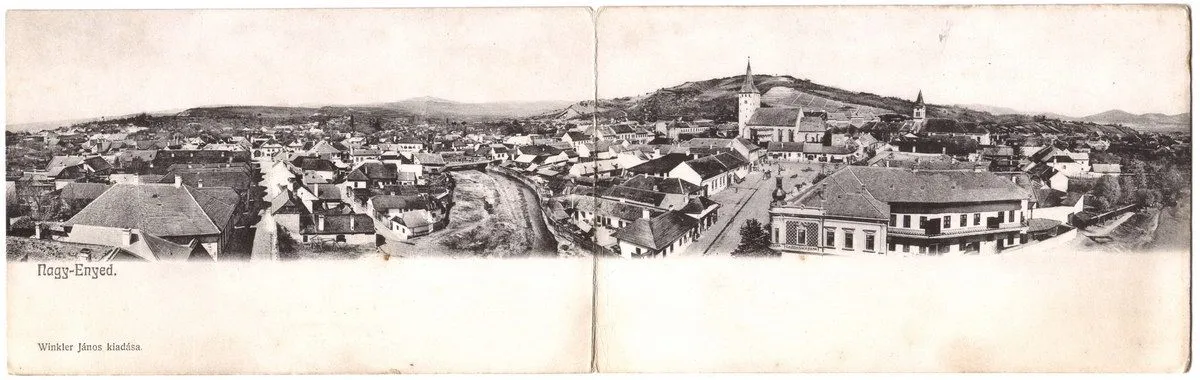
Located 50 km from Cluj-Napoca, the town of Huedin has played throughout history the role not only of an important centre of trade and crafts, but also of a cultural one.
In 1899 the "Huedin Branch of Astra" was founded here, and within a short time it took in peasants, clerks and above all the village intellectuals (from some 80 localities). Its leadership, headed by Eugen Popa and the priest of Valea Drăganului, Aurel Munteanu, set out to increase cultural activities in order to raise the cultural level of the peasantry.
The leaders of the Branch initiated lectures, reading rooms and artistic events, and considered "the publishing of literary, scientific and artistic publications". At the meeting of 23 November 1910 it was decided to publish a newspaper that "should be the primer of Romanian culture at our hearths", and that it should be called "Sfătuitoriul" ("The Counsellor"), the popular paper of the Hida-Huedin Branch of the "Association for Romanian Literature and the Culture of the Romanian People".
The first issue appeared in January 1911, with the leading article "Beloved Romanian people". It set out the paper's intention "to spread useful knowledge", since "we have beauty, strength and a keen mind, so let us also gain the learning we lack, that we may be worthy sons of our ancestors". Shortly afterwards the "Gazeta Transilvaniei" praised the initiative, stating that "this is the first time that a Branch of the Association has created its own organ. The fact is worthy of praise and of imitation. We greet the new paper and wish it a long life".
In every issue the newspaper published articles popularising the achievements of notable people – about Eminescu, Alecsandri, Coșbuc. Many pieces dealt with Romanians everywhere, such as: "The Origin of the Romanian Nation", "The Romanian Faith", "Our Toil – Another's Income", "On Learning ", "Ten Commandments for the Romanian ". Here we refer only to the article "The Mother Tongue". It was written at a time when the denationalisation policy pursued by the Austro-Hungarian dual regime had grown harsher. The author points out that only the Romanian language had remained "the only inheritance we have from our ancestors ... we learned it from our mothers, it is rooted in our souls, in our hearts, and it is our most precious treasure".
Several literary attempts by Aurel Munteanu saw print in this publication, among them: "Vasile and Varvara", "The Moț with the Lordly Bread"; others he either did not sign or published under a pseudonym.
But after 18 issues, lacking a solid financial base, the editors ceased publication, regarding the interruption as short-lived.
0 comments