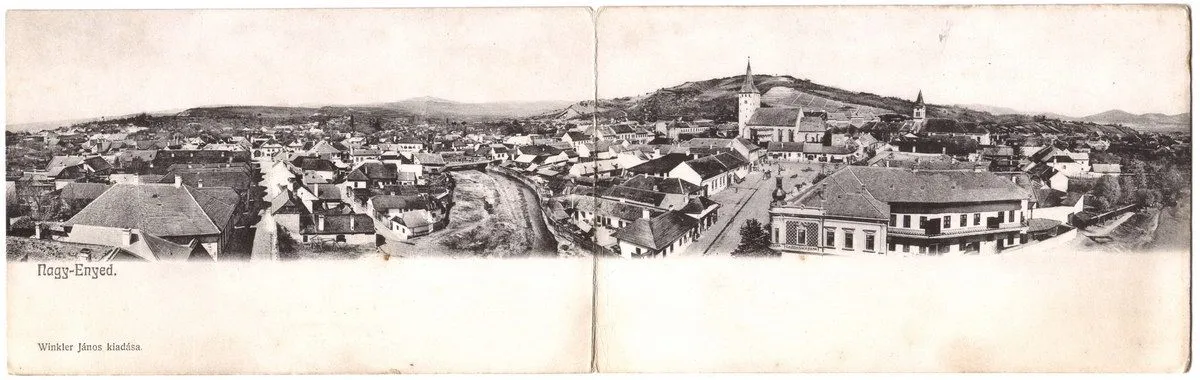
Armindeni
Everyone knows the 1 May holiday as a celebration of workers' solidarity and, above all, as a day off.
Few people know that in fact, long ago, 1 May was the day of Armindeni – an ancient folk festival of Roman origin. Let us linger a little and learn something about it... The 21st of April was celebrated by the Romans as the day of the founding of Rome (753 BC, by Romulus Quirinus), and it is still celebrated today by Italians under the name of the Palilia – in honour of the goddess Pales, protector of animals and shepherds. Over time this festival also acquired a political connotation, turning into a festival of the empire, complemented by circus games. Gradually it was promoted throughout the empire, and thus it reached our lands as well with the conquest of Dacia.
Another important festival among the Romans was the Floralia, in honour of the goddess Flora – goddess of the fertility of the fields and of flowers in general. It was celebrated in spring, to ask for divine protection over that year's crops. It is worth noting that this festival did not have a regular character until 581 BC, when the consuls Laenas and Postumius fixed its duration at 6 days and its time at the beginning of May. "The noisiest parties and merriment, both in the provinces and in Rome, were reserved for the first day of May [...] brows are crowned with flowers, splendid tables are covered with a shower of roses, the guests wear on their heads garlands bound with linden flowers, and they leap and dance in good spirits from the fumes of the wine [...] " (Ovid).
In Transylvania, this tradition branched out: lighting fires in the evening and decorating gates and houses with green branches are specific to the eve of St George's Day, while the folk festival connected with spring settled on 1 May. The name of this folk festival was Armindeni. The etymological origin of the word "armindeni" is debatable: most would say that it comes from the prophet Jeremiah, who is also celebrated on 1 May (in Old Church Slavonic Ieremiinu-dini means the day of Jeremiah); others maintain that "armindeni" comes from the Latin term "armentum" – herd, flock – as a symbol of the pastoral character of the festival.
The first to record the festival of Armindeni was "the patriarch of the Romanian Enlightenment", the scholar of the Transylvanian School, Samuil Micu. In his work Scurtă cunoștință a istoriei românilor (A Short Account of the History of the Romanians, 1792–1796) he wrote: "On the first day of May, the Romans held the Festum Umbraculorum, that is, the festival of the bowers, making bowers of leafy branches in front of their houses. So do the Romanians in the villages today: they bring armindeni, green leafy branches, and set them in front of their houses and keep a holiday, even though by church rule it is not a holiday" (Samuil Micu).
Bibliography
- Cultura Română Modernă și Idealurile Naționale (Modern Romanian Culture and the National Ideals), Ioan Silviu Nistor, Editura Didactică și Pedagogică, București, 1997
Other unusual facts about Transylvania
- Bolii Cave
- Freemasonry in Transylvania
- The Dinosaurs of Hațeg Island
- The Snail Hill (Dealul cu Melci)
- Underground Cluj
- The Cave Paintings of Coliboaia Cave
- The Red Caps (Șepcile Roșii)
- The Kissing Fair of Hălmagiu
- The Cave Paintings of Cuciulat
- The Secret of Vlad Țepeș: The Love from Corona
- Claudia Rhédey de Kis-Rhéde
- What Became of Vidra after Răzvan's Death
- Witch Trials in Transylvania
0 comments